


I'm Darren Samuelsohn, and this is The love, journalism Show. We're talking with Substack heavyweight Roger Pielke Jr. about how controversy in academia became a career in storytelling.
First time visiting? Please sign up for my love letter from the beat.
Roger Pielke Jr. has been called a lot of things over the past two decades: misleading, inconvenient, a "cottage industry" unto himself, even Voldemort. He’s made it work, too.
In our conversation the University of Colorado professor turned Substack heavyweight (40,000+ subscribers, 174 countries) walked me through how he built a new public dashboard tracking U.S. extreme weather — heat waves, hurricanes, floods, drought, wildfire — after the Trump administration pulled the U.S. government’s climate indicators offline. He did it solo, using Claude, in a couple of weeks. A global version is next. He no longer has a research assistant.
We revisited March 2006, the month he won a National Academy of Sciences award for showing that rising disaster costs were about more people and property in harm’s way — not worse storms. Two months later, An Inconvenient Truth came out with a hurricane on the poster, and extreme weather became, in his words, “the face of climate change” almost overnight.
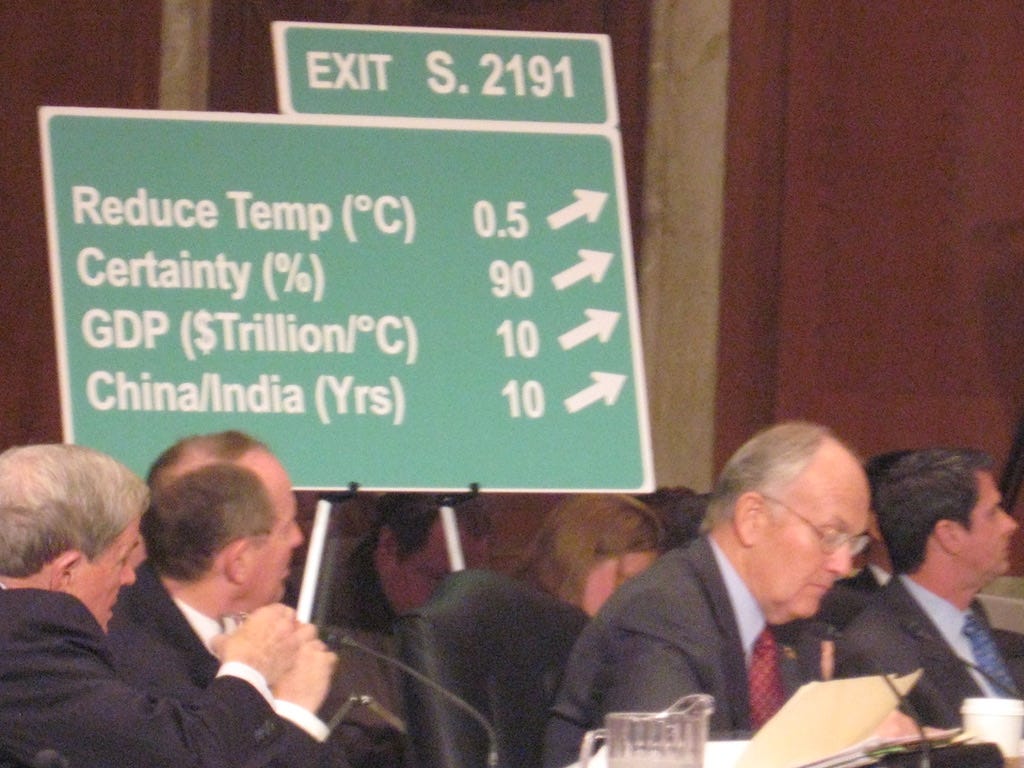
His work didn’t fit a narrative. He named names on what came next: a 2014 campaign — he says organized in part by Michael Mann and the Center for American Progress — that got him pushed out of Nate Silver’s FiveThirtyEight.
Congress investigated him. He’s testified before Congress. He shows up in the WikiLeaks dump, the ClimateGate emails, and the Slack messages from COVID’s origins debate. For his being in so many places, I awarded him the environmental-wonk version of an EGOT.
We also got into cap-and-trade’s failure, the emissions drop nobody legislated for, what he’s learned about staying in the weeds while many others chase the headline.


