


I’m Darren Samuelsohn, and this is love, journalism.
Today’s edition features a tribute, three months late.
Bali’s big coastal resort town in December 2007 had thick suffocating air, diesel exhaust, beaches pure and littered, and also more than 10,000 humans descending into rich hotels to argue about binding targets and roadmaps for saving a warming planet. Back in Washington, where I lived and prepped for my trip, I made a notebook entry about Kramerbooks selling out of Indonesia guidebooks as climate wonks prepped for trans-Pacific flights to a U.N. conference that concluded two weeks later with diplomatic dignity surrendering to a chorus of boos showered on the American delegation.
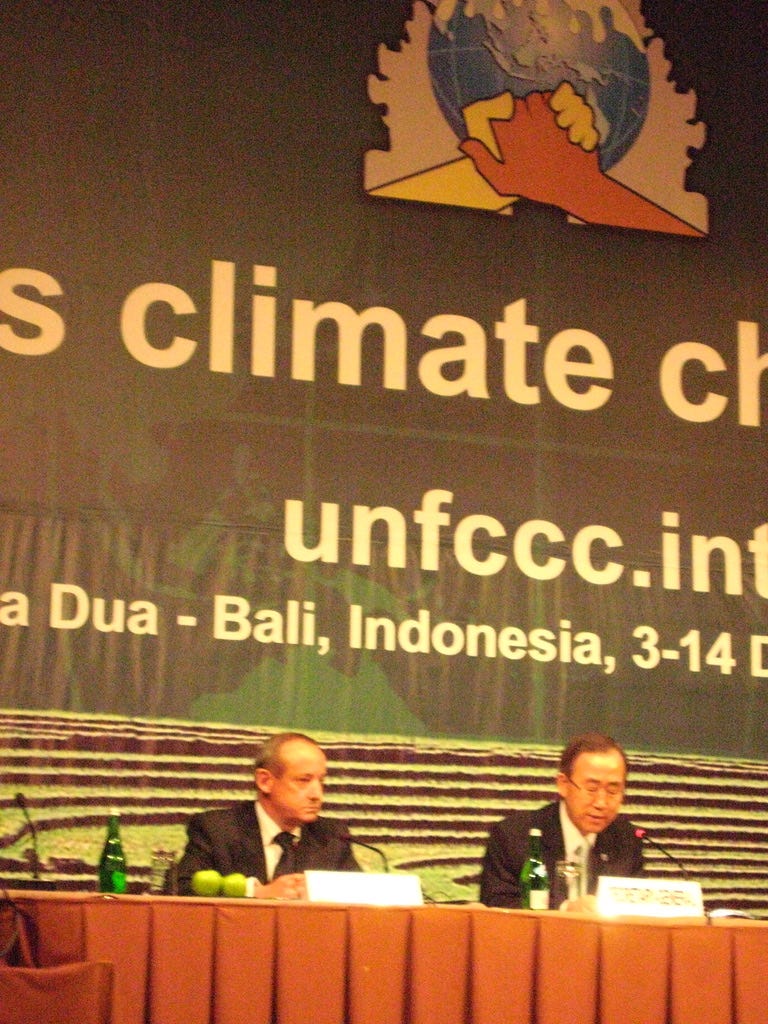
George W. Bush had been resisting anything resembling what the world wanted and I documented those moments for back home via a clunky internet and editors who were fine waiting until the Monday after the conference ended to publish my comprehensive wrap. I also had no return ticket, just a green light to pursue a complementary story of my choosing. One thing led to another and a senator’s staff connected me with a USAID officer at the embassy in Jakarta. In her office a few days later, almost as an aside, she asked me: Have you heard of Biruté Galdikas?
I hadn’t.
We met at the airport. Local reporters, volunteers and a whirlwind of workers helped move a couple of cages off the flight out of Thailand onto a commercial plane that would take four orangutans to Borneo. Biruté supervised everything and then boarded with me, beginning to slowly answer questions from the Greenwire reporter who’d chronicle this amazing handoff.
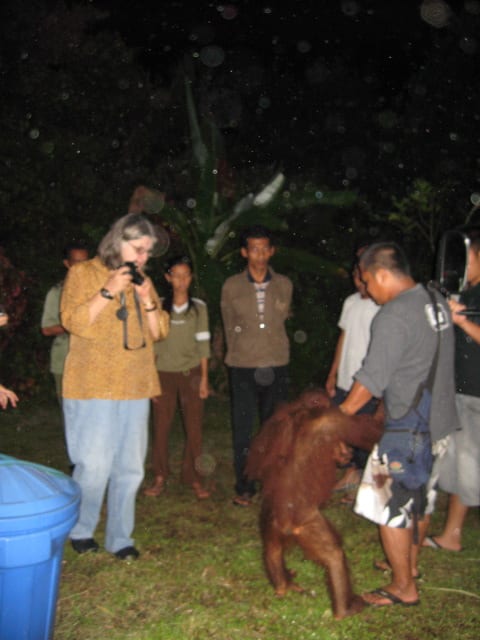
Our convoy went from a small regional airport in Pangkalan Bun to a four-hour truck ride on a one-and-a-half lane potholed road past what used to be forest. Our itinerary was foggy and Google Maps wasn’t a thing, but I remember that early morning arrival at her Kalimantan rehabilitation center when Galdikas cradled the rescued orangutans in the night, one animal’s arm around her neck, her focused attention.
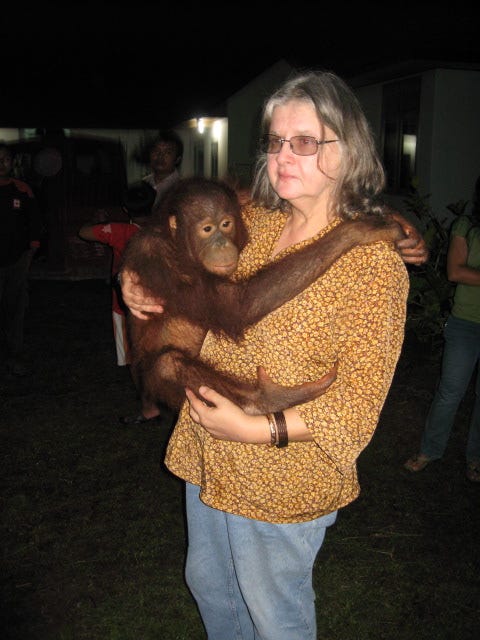
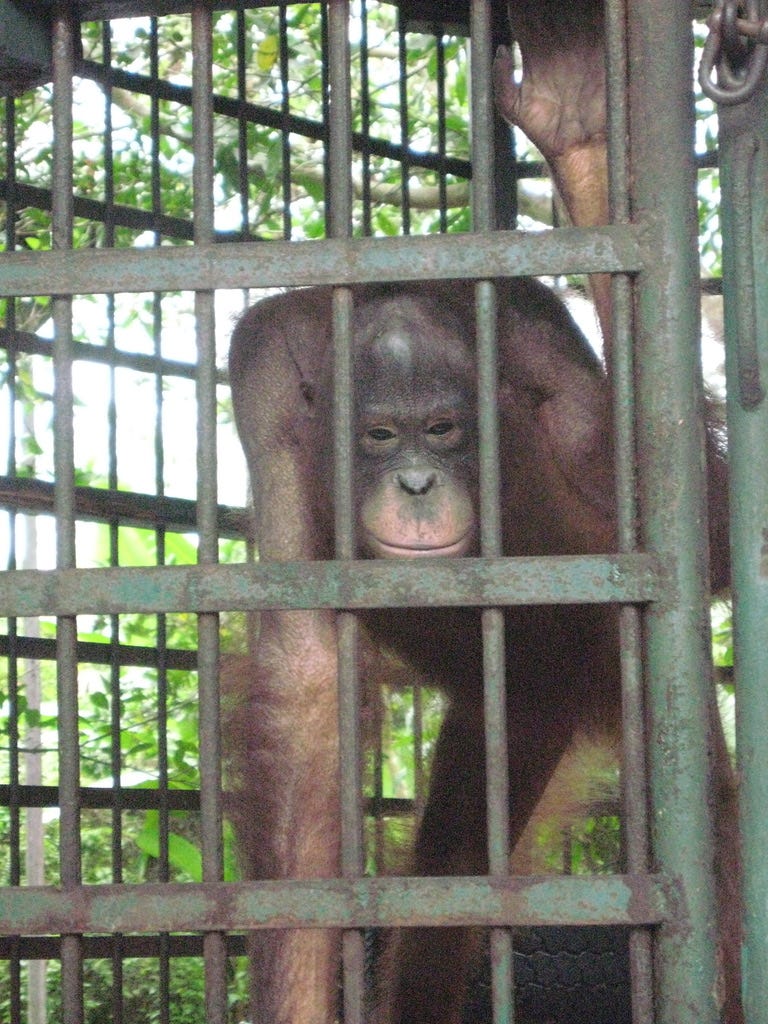
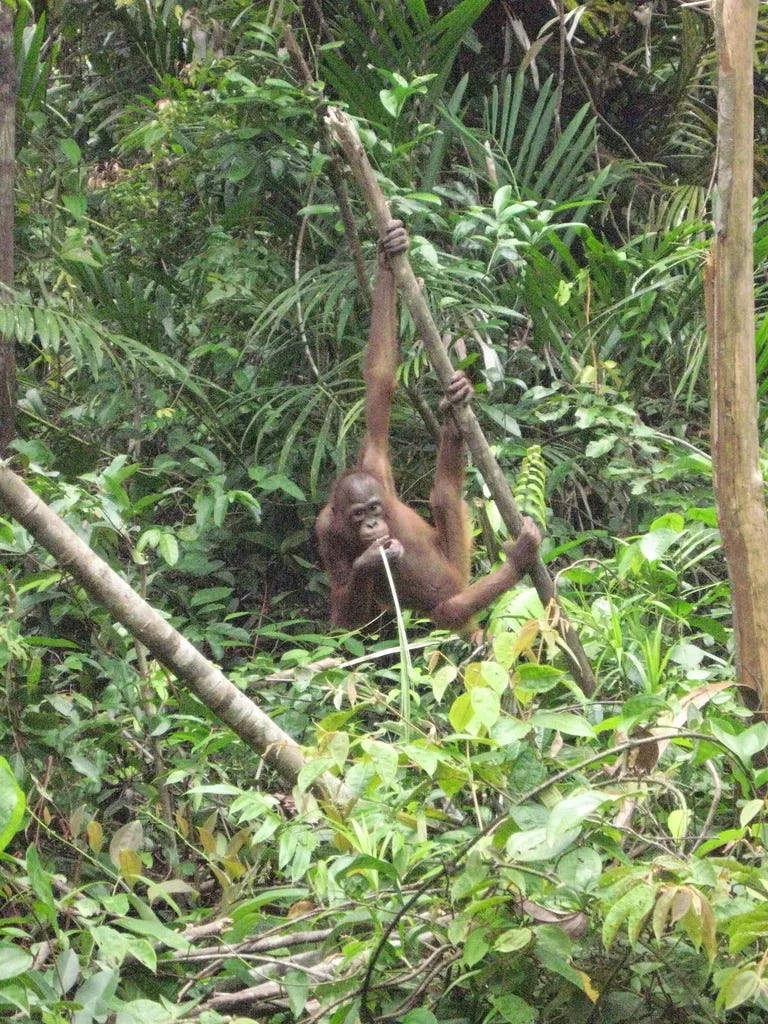
For the next two days I’d explore with Biruté, her family, her staff, volunteers and locals. They’d take me to the rehabilitation center — a zoo, veterinary hospital, nursery school all at once — we’d walk down wood-plank trails to where the wild and released orangutans lived, their daily feedings, the animals panhandling fruit through cage bars. Joining them were the four former kickboxers from a Bangkok amusement park, home at last.
“If an orangutan needs help, we’re there, no matter where the orangutan is.”
My raw interview transcripts have something else I didn’t use, but which really sticks out now: “Extinction when it comes we won’t see it coming. It’s not going to be today I get ten, tomorrow nine, next day seven. Just suddenly we’ll stop getting them.”
I took tons of photos and video, an elaborate production of the orangutan rescue operation reported from a remote tropical corner of the world I hadn’t known existed. At E&E News, my reporting turned into something even cooler for its time: a special report. My Facebook profile photo for years afterward was a shot of me with an orangutan — one the staff had named Darren. It only changed when the Cubs won the World Series.

Borneo was the best version of an instinct I’d been acting on for years — the farthest from Western civilization I’d felt in my career, the most exotic dateline, the most unexpected story. It wasn’t on my beat.
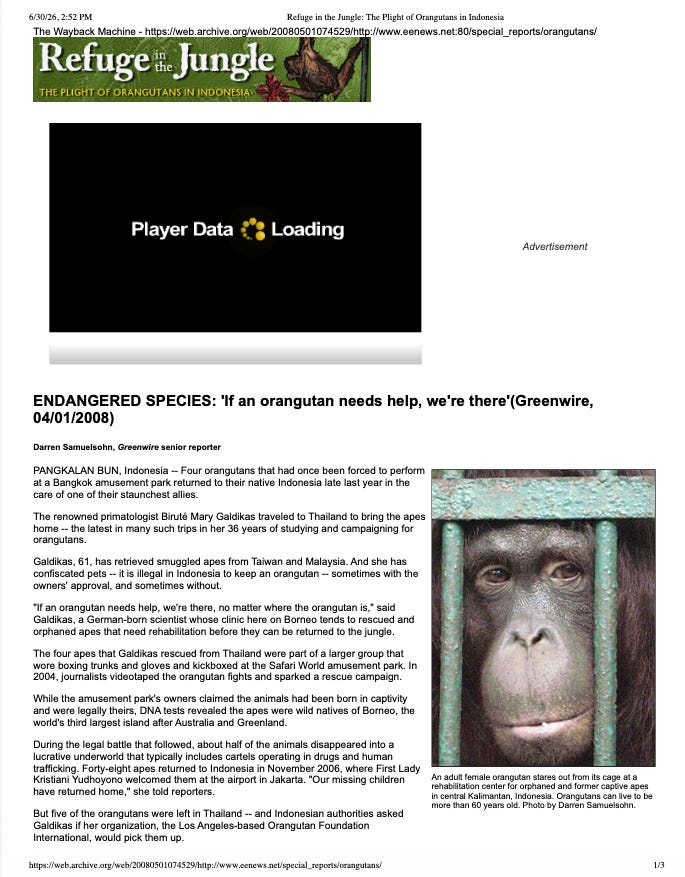
The piece ran April 1, 2008, in Greenwire. My photos — the adult female staring through teal cage bars, Galdikas holding Joy in the night — ran with my byline. The special report lived at eenews.net for a while, then E&E changed hands, and the video we produced vanished. Lost in an ownership transfer. I’ve asked. No one knows. The description survived in the Wayback Machine. The footage didn’t.
Biruté Mary Galdikas died on March 24, 2026. She was 79. Lung cancer and pulmonary fibrosis — conditions likely worsened by years of fighting the wildfires consuming the very habitat she’d spent her life protecting. She was the last surviving member of what she called “Leakey’s Angels” — the trio of primatologists Louis Leakey sent into the field alongside Jane Goodall and Dian Fossey. She had been in Borneo for 55 years. She died in Los Angeles, eight thousand miles from the swamp she’d made her life’s work. She was buried in Borneo beside her late husband.
I didn’t know.
March 2026 was when I first stepped away from USA TODAY. The month I stopped checking the wire for the first time in 30 years. I had been running on the news cycle’s clock for decades and I was finally, deliberately, putting it down — not because I didn’t care, but because I had to. The fire had shrunk and I needed to let it.
Tributes and obituaries ran in The New York Times, on conservation sites, animal welfare publications and in the corners of the internet where people who’d devoted their lives to orangutans gathered to grieve. I found out in June, three months later, while pulling together material for love, journalism’s relaunch.
As I dug in, reading one of the lengthier tributes I could locate online, my 2008 Greenwire piece got cited as a primary source. The reporting I almost didn’t do, from a trip I almost didn’t take, had become part of the permanent record of her life. The story found me, I filed it, moved on, and it kept living without me for 18 years.
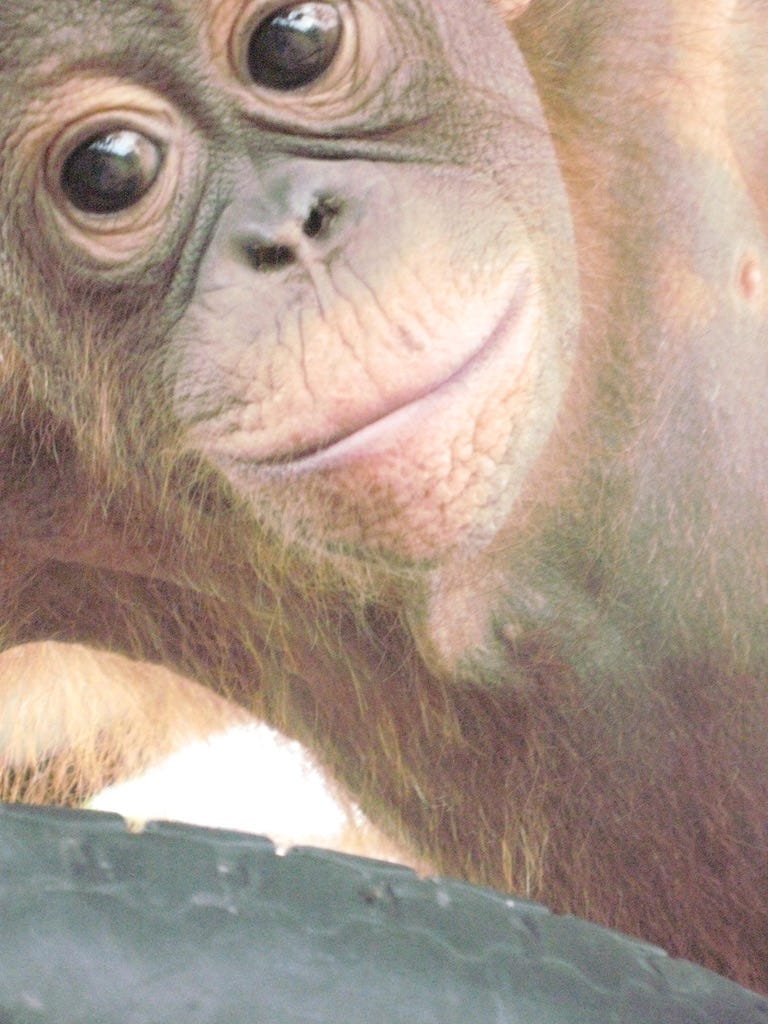
She was still fighting at the end. Her last donor letters track three simultaneous emergencies: a COVID backlog of traumatized orangutans who’d never learned to climb trees, wildfires that destroyed 150,000 seedlings in a single season, illegal gold miners pushing into Tanjung Puting National Park. Eight months before she died, she was writing about looking into the eyes of two rescued infants named Kujan and Ramil and being reminded of what was at stake.
She told me in 2007: “There doesn’t seem to be any progress.” She kept going anyway.
I’ve been thinking about what she said about extinction — how it won’t announce itself, how one day you’ll just stop getting them and you won’t know it’s already happened until later. She was describing orangutans. I heard it differently when I found out she was gone.
Biruté Mary Galdikas, 1946–2026. She is buried in Borneo, in the forest she saved.