



I’m Darren Samuelsohn, and this is The love, journalism Show.
First time visiting? Please sign up for my love letter from the beat.
When Byron Tau came up through Politico, I was part of his mentorship program. I want to say, for the record, that I’m fairly certain he needed it a lot less than the program assumed he did.
Byron was one of the most confident young reporters I have ever been around. He just seemed to know how to get whatever he needed. And if he couldn’t get it directly, he’d talk his way around it until he did. Young, brash, funny — and with Jennifer Epstein beside him on the White House team, the two of them bickered like siblings and produced like veterans. Being part of that newsroom dynamic was genuinely one of the pleasures of my life on that beat.
I’ve always felt a sense of pride watching him go from that Politico desk to the Wall Street Journal, to NOTUS, and now published author and investigative reporter for the Associated Press. This spring, Byron was part of an AP team that collected the Pulitzer Prize for a global investigation into surveillance tools built in Silicon Valley, refined in China, and quietly brought back home for secret use by the U.S. Border Patrol. The citation called it astonishing. It was.
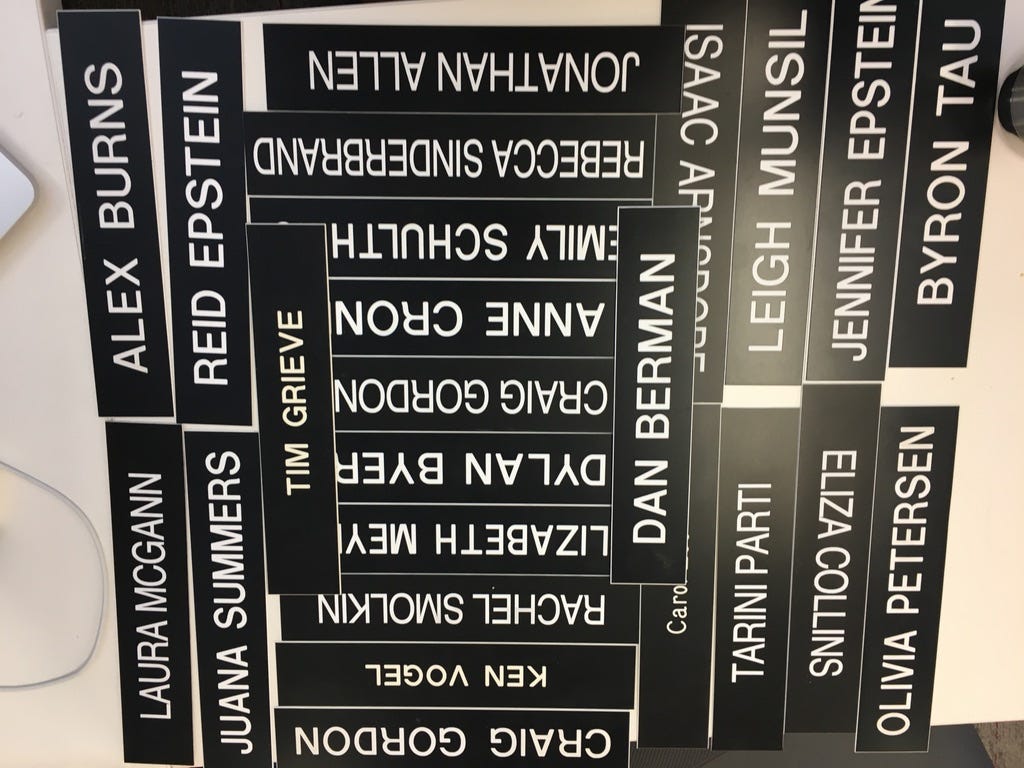
Before all of that, Byron waited tables at the Cheesecake Factory on Wisconsin Avenue for nearly two years — getting his master’s degree, collecting internships at Roll Call, the New Republic, the National Journal’s Hotline — working his way toward a job that didn’t exist yet in a city that wasn’t ready to hire him. That’s the origin story. He got to Politico, got under Ben Smith’s wing, learned to be fast, learned to monitor everything, learned how a well-regarded reporter manages sources without getting spun. And then he was off.
In this episode, we talk about what it was like to cover Barack Obama as a 26-year-old with a White House credential and the nerve to use it. We talk about the surveillance reporting — how it started with a tip about the border region, how it built through litigation records and a motorist from Houston who’d filed a lawsuit, how the Border Patrol all but confirmed the story before it ran. We talk about mentorship, and Byron is honest about it: the stubborn streak, the self-made impulse, the things he might have taken more of if he hadn’t been so determined to figure it out alone. “You were always there as a resource,” he told me. “I probably could have just used you a little bit more.”
I’ll take it.
And then I asked him what a Pulitzer actually changes.
“The work is still the work,” he said. “Prizes are nice, but it’s not the reason we do this. The reason we do this is to tell stories that are important to the public and to hold powerful institutions accountable when they let down the people they’re supposed to serve.”
I didn’t teach him that. But I’m glad he knows it.


We close with Current Events — the segment where guests quiz me on the week’s news, knowing full well I’ve gone from consuming everything to reading the print Washington Post and whatever I overhear during the day. Seth Kaplan got me. Neetzan got me. Byron had the decency to go local.
Guests lead, three to nothing.
Press play.


