


I’m Darren Samuelsohn and this is The love, journalism Show. We’re talking with Katie Harbath, a Substacker and author of a new book about her career leading global election policy for Facebook.
First time visiting? Please sign up for my love letter from the beat.
Back in 2013, fresh off covering the Obama reelection race, I got a new beat at Politico. My bosses let me tap one of my strengths. I got into the guts of politics by reporting and writing how campaigns were using technology, data, and messaging to reach voters in totally new ways.
That beat gave me some of my favorite stories. “They Like Me, They Really Like Me,“ about Ed Gillespie’s near-upset of Sen. Mark Warner, built around Facebook and Virginia voters’ preference for Buffalo Wild Wings. And The Viagra vote? — political campaigns wanting to know absolutely everything about the people they were targeting, supplements included.
In 2016, that same beat led me to a different story: a nephew and an uncle who stopped speaking to each other over Facebook. Brent Blackaby and Phillip Mullard had survived decades of political disagreement until Donald Trump broke something. A year later their online fight became the basis for a national Sprint commercial.
Somewhere inside the building where all that arguing lived, Katie Harbath was trying to figure out what to do about people like Brent and Phil. She’d joined Facebook in 2011, built the team that ran elections work across the globe, and stayed through the decade the company spent reckoning with what it had built. Rising through the ranks, Katie rubbed elbows with Mark Zuckerberg, Sheryl Sandberg and many world leaders eager to use the latest tools to win or hold onto political power.
I finally got her on The love, journalism Show this week, and it did not disappoint. We opened with a line from her new book: when people leave jobs, we don’t talk enough about the loss of community that comes with it, especially when the departure is sudden.
We also talked about the Rudy Giuliani presidential campaign in 2008, before “social media strategist” was even a job title. She recounted a night at a Ritz-Carlton bar in January 2020 where she started mapping out the scale of what 2024 was going to look like — and about January 6th, watching two institutions that shaped her life come apart in the same afternoon. We talked about burnout, about companies not loving you back, about deplatforming Trump in 2021 and believing that letting him back on in 2023 was right too.
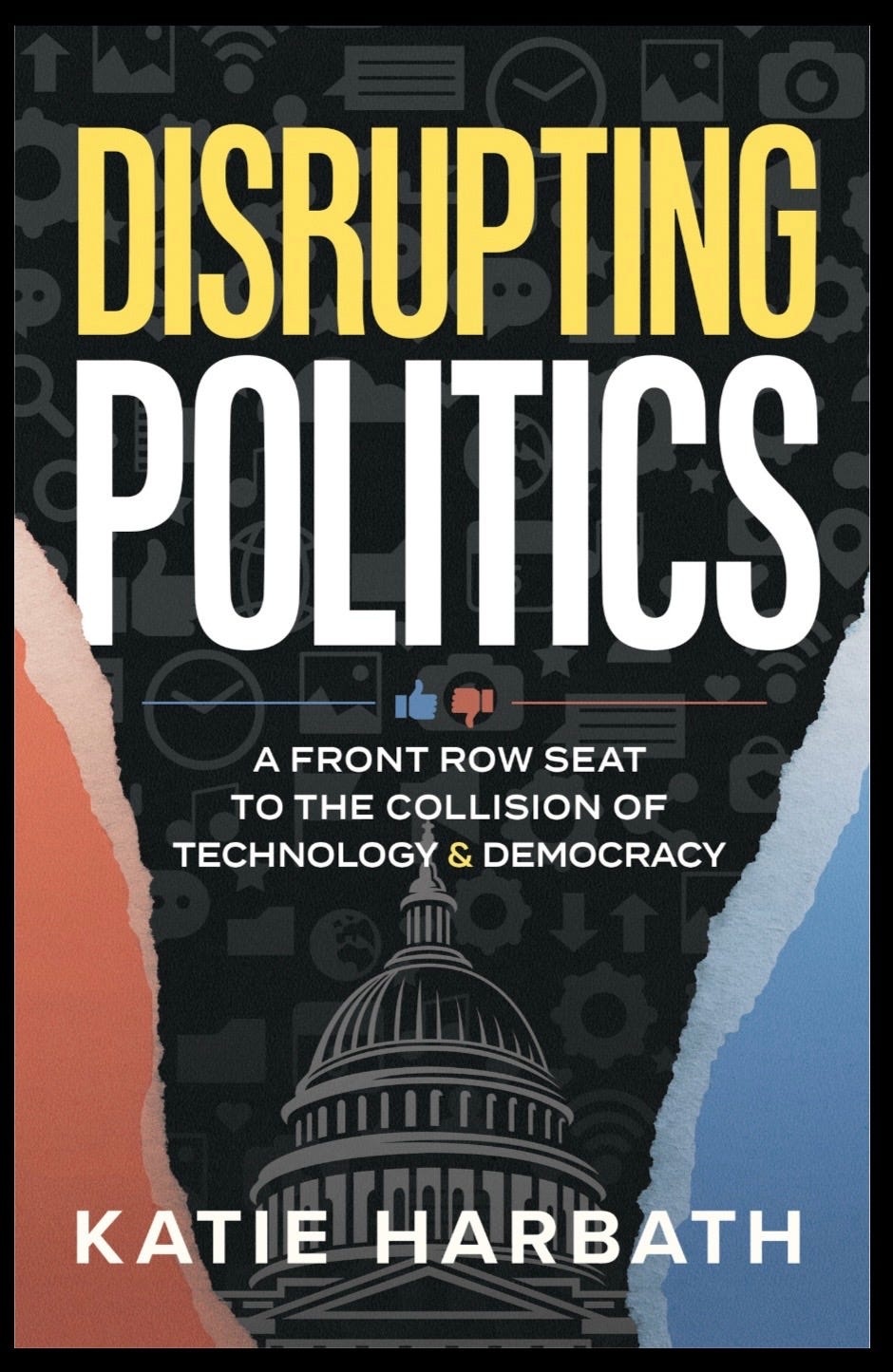
Her new book, Disrupting Politics, comes out October 6th. It resists the easy version of her own story — aka the “villain at Facebook” — without letting anyone, including herself, entirely off the hook. That tension is the whole book, and it’s the whole conversation.
A quick behind-the-scenes note: we hit a few technical glitches this week — turns out coffee and a laptop don’t go well together — which meant I had to MacGyver my way through producing this entire episode on an iPad. Learned a lot. We got there.
Full episode is up now.


